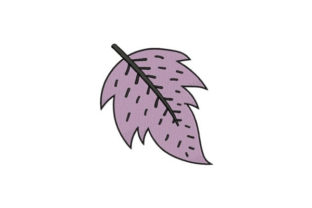
Purple Leaf Review: A Pro Take for Small Business Merch
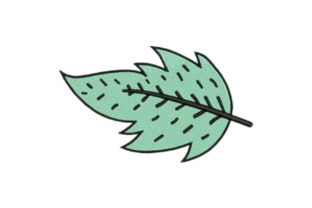
As an embroidery designer who has spent years digitizing and stitching for boutique brands, I approach every new machine embroidery design with a critical eye. It is not just about whether a file looks cute on a screen; it is about how that digital embroidery file translates into a tangible asset for a business. Today, I am reviewing the Purple Leaf design, a piece categorized under Forest themes, to see if it holds up as a viable tool for small business merch, branded patches, and custom apparel.
My first impression of Purple Leaf is that it strikes a balance between friendly and professional. The title suggests a nature-inspired aesthetic, which immediately brings to mind florists, organic bakeries, eco-friendly boutiques, and creative studios. Unlike some overly complex botanical designs that lose definition when scaled down, this design appears to have the clean lines necessary for commercial application. It feels less like a decorative afterthought and more like a deliberate brand mark. For a handmade product seller on Etsy or a local café looking to upgrade their staff uniforms, this kind of visual personality is crucial. It signals growth, nature, and a touch of elegance without being overly rustic or messy.
Real-World Application for Branded Merchandise
When evaluating Purple Leaf for real business use, the versatility is its strongest asset. Imagine a local coffee shop wanting to move beyond paper cups and offer reusable tote bags. A tote bag design featuring this leaf could serve as a subtle yet recognizable logo on the corner of the bag. Because the description notes it is ready for any fabric, it likely performs well on canvas, which is a staple for retail merchandise.
For service-based businesses, such as a floral studio or a pet grooming salon, apron embroidery is a fantastic way to build team unity and brand recognition. Placing Purple Leaf on the chest pocket or the upper sleeve of a uniform apron creates a polished look that customers trust. It elevates the perceived value of the service provider. Similarly, for cap embroidery, this design could work beautifully on the side panel or even the front, provided the curvature of the hat is accounted for during the hooping process. The "Forest" category alignment makes it a natural fit for outdoor gear shops or gardening centers looking to create custom apparel for their staff or loyal customers.
Beyond uniforms, consider the potential for an embroidered patch. Patches are currently a huge trend in small business merch. If Purple Leaf has a defined border or sufficient spacing between elements, it could be stitched onto a twill backing and sold as an add-on item or included as a free gift with purchase. This turns a simple transaction into a branded experience. Whether it is used as a sleeve detail on a work shirt or a central motif on a product packaging accent, the design serves to reinforce brand identity consistently across different mediums.
Critical Considerations for Production
However, enthusiasm must be tempered with technical scrutiny. Before running a production batch, there are specific areas where Purple Leaf requires careful attention. If you intend to use this as a small patch, perhaps under two inches in width, you must evaluate the stitch density. High-density areas can cause the fabric to pucker or the details to merge, making the leaf look like a solid blob rather than a detailed illustration. This is especially true on textured fabrics like Terry cloth or heavy denim.
Dark uniforms present another challenge. If the thread colors in the Purple Leaf file do not have enough contrast against navy or black garments, the design will vanish. In these cases, you may need to manually adjust the thread chart in your embroidery software to include a lighter underlay or a contrasting outline. Furthermore, curved surfaces like cap fronts require a design that is not too wide or asymmetrical in a way that distorts when viewed from the front. Always test the design on a scrap piece of the actual garment fabric before committing to the final run.
Frequent washing is another factor for items like aprons and work shirts. A design with long satin stitches or loose connecting threads may fray over time. Ensuring that the finished product can withstand industrial laundering is part of the designer's responsibility. If the design relies on tiny lettering or intricate outlines, these are the first elements to degrade. For Purple Leaf, focusing on the integrity of the main shape is key to longevity.
Impact on Brand Identity and Customer Trust
The choice of embroidery directly influences how customers perceive a brand. A sloppy, puckered, or poorly chosen design can undermine professionalism, while a crisp, well-executed motif like Purple Leaf enhances it. When a customer sees a consistent visual language across a tote bag, a staff shirt, and a product label, it builds trust. It tells them that the business pays attention to details. For handmade brands, this level of finish distinguishes them from mass-market competitors. It validates the price point and suggests quality.
Moreover, using a cohesive design asset across all design assets helps with visual consistency. If Purple Leaf becomes the secondary logo or the iconic symbol for a business, it aids in recall. Customers begin to associate that specific purple hue and leaf shape with the quality of service they received. This emotional connection drives buyer engagement and encourages repeat business. In the world of commercial embroidery, the stitch is the signature; make sure it is one you are proud to display.
Professional Designer Notes and Best Practices
To ensure the best results with Purple Leaf, I recommend following a strict pre-production checklist. First, test the design in black and white. This removes the distraction of color and allows you to see if the contrast and definition hold up purely on form. Next, verify the hoop size requirements. While the description states it is ready for your next project, always confirm the minimum dimensions needed to capture the full detail without cropping essential elements.
Stabilizer selection is non-negotiable. Depending on the fabric texture, you may need a cut-away stabilizer for stretchy knits or a tear-away for stable wovens. Using the wrong stabilizer can ruin the drape of a garment or cause the design to shift. Additionally, create a printable mockup for client approval. Showing a digital representation of how Purple Leaf will look on a specific garment color helps manage expectations and prevents costly mistakes.
Finally, and perhaps most importantly, confirm the licensing terms. The description mentions it is high-quality and ready for sewing, but before using it for small business merch intended for resale, you must ensure you have the appropriate commercial license. Do not assume; read the fine print. Also, since specific technical details like exact stitch count or file formats were not explicitly detailed in the brief description, advise your production team to inspect the file properties upon download. By taking these precautions, Purple Leaf can transform from a simple digital file into a powerful engine for your brand's growth.